生命周期评估
在当今世界,我们必须了解客户的目标,并创造可持续的产品解决方案来满足他们的需求。 在实践中,我们通过采用产品生命周期的方法来确定以市场为导向的可持续创新机会,从而实现这一目标。 我们对主要产品线进行了 生命周期评估(LCA),以更好地了解产品对环境的影响,如温室气体排放。
通过生命周期评估,我们可以做出明智的决策,并确定优化生产流程或原材料是否可以改善产品的环境足迹。 LCA对于促进与供应商、供应链合作伙伴和客户就其产品进行更密切的接触,并朝着提高价值链和整个社会的可持续性发展而迈进至关重要。
Product Life Cycle
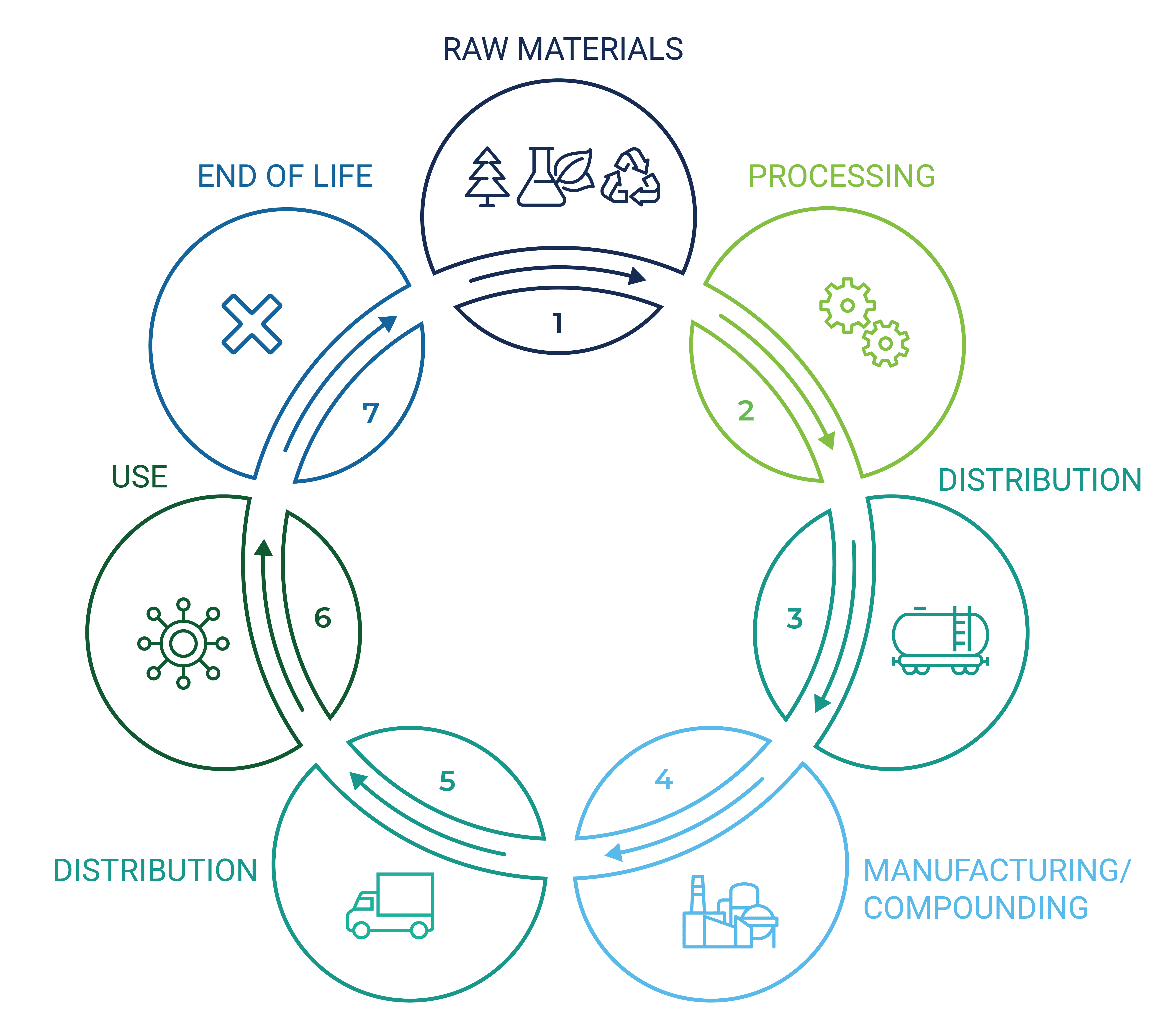
Raw Materials
Reduce upstream corporate emissions and the product carbon footprint (PCF) of products by shifting to renewable raw materials with a lower PCF.
Processing/Manufacturing
High-performance raw materials can reduce energy consumption, waste or water consumption, and/or volatile organic compound (VOC) emissions and allow for safe handling and meeting health & safety requirements.
使用
High-performance raw materials may help extend life, improve product performance, reduce weight, and lower energy consumption in use. Together, these benefits help reduce the overall PCF.
End of Life
Raw materials with plastic modification features like Kraton’s styrenic block copolymers (SBC) can enable the re-use of components or the recycling of raw materials.
应用 from Life Cycle Assessments
未来的创新过程可能会受益于这些信息,帮助我们发现提高产品整体可持续性的机会,例如
在生命周期评估的帮助下,我们可以为客户提供对环境负面影响较小的产品。 生命周期评估为加强与供应商、供应链合作伙伴和客户的合作打开了大门。
LCA 聚焦
生命周期成功案例:Interface, Inc.
全球最大的模块化地毯制造商Interface, Inc.与 Kraton 合作开发了一种生物基地毯背衬。 了解 Kraton 如何与Interface合作,评估产品的长期影响,以确保对环境的低影响。