イノベーションストーリー
マスチック橋デッキ
はじめに
ポーランド北東部のマズールィ地方は、2,000もの後氷河期湖があることで有名です。丘陵地帯に広がる湖や川、小川の多い美しい景観は、新しい道路建設には適していません。
挑戦
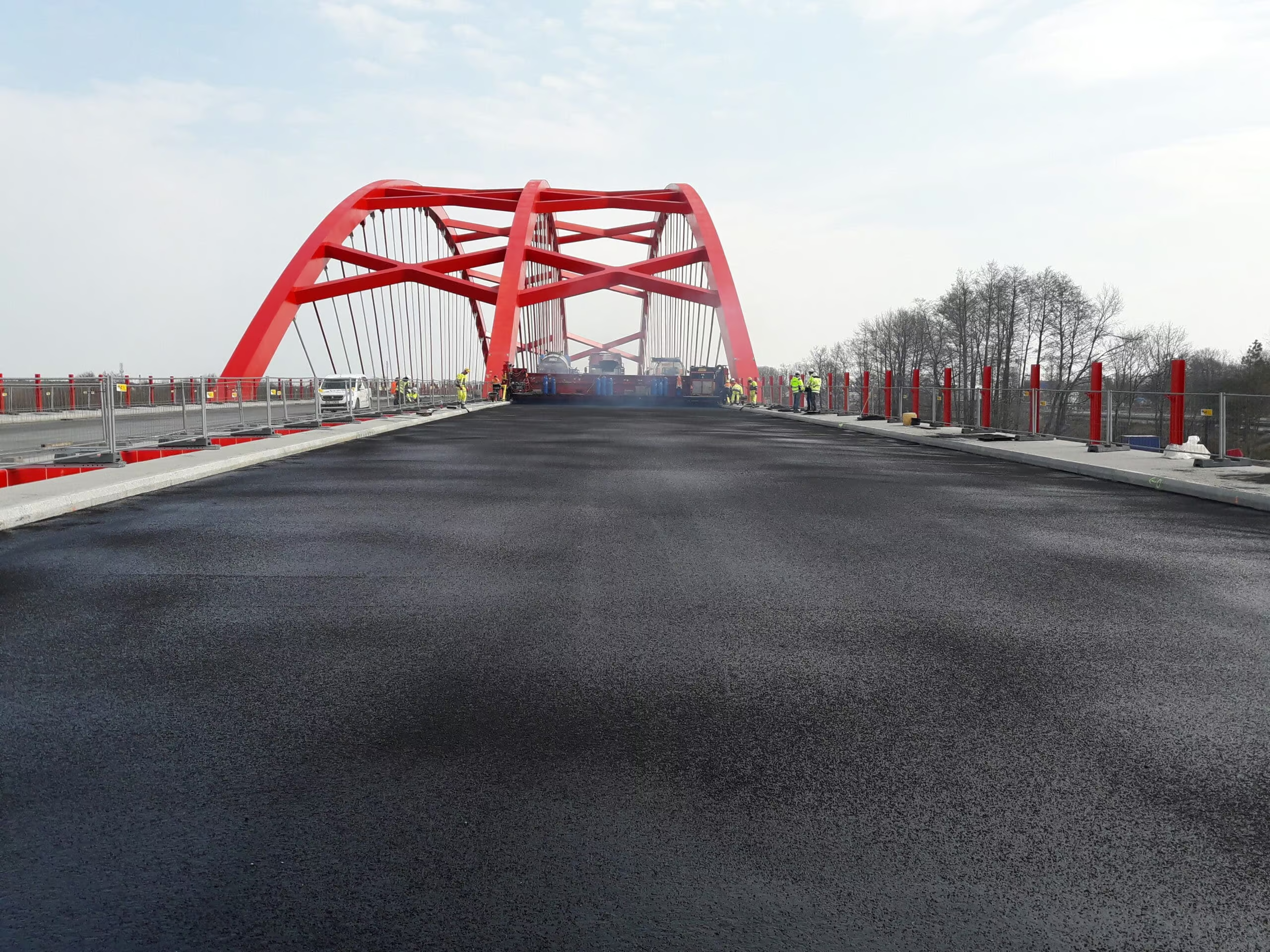
In 2015, GDDKiA Olsztyn (asset owner) signed a contract with Budimex S.A. (general contractor) for a bypass and expressway around the city of Ostróda for a total of 1 billion PLN. The project consisted of several bridges, including an extra dosed bridge, MS-3 along DK16. The MS-3 bridge would be 28 m (92 ft) wide and span a total of 677 m (2,221 ft) – stretching over a creek, two existing roadways and two animal passageways. The construction required the highest quality, sustainable, and rut-resistant bridge deck pavement.
決議
The pavement solution came in the form of a HiMA™ technology-enabled mastic asphalt. A leading polymer-modified bitumen (PMB) producer in Poland, Lotos Asphalt, formulated and produced the PMB. The final structure consisted of 25 cm (10 in) of the reinforced concrete bridge deck, waterproofed methyl methacrylate membrane, and two 4 cm (1.6 in) layers of mastic asphalt, including 11 modified with 45/55-80 HiMA. Asphalt mastic production temperature was between 190-210°C (374 – 410°F). The material experienced up to eight hours of transport at 200°C (392°F). Subsequently, it was compacted between 200-220°C (392-428°F). Despite the high polymer content, the contractor did not observe any particular difference from conventional mastic bitumen. The job was completed in 2017 and resulted in a permanent deformation-resistant bridge deck that continues to perform today.
Related Resources
関連製品および情報
参考文献
詳細についてはニュース、サクセスストーリーをご覧ください。
CirKular+による繊維リサイクルの推進
ファッション業界における持続可能性の課題への取り組み道路の持続可能性を促進
より安全な道路標識のためのバイオベースロジンエステル舗装材のライフサイクル延長
クレイトンSBSポリマー