Case Study
Interface, Inc.
From Carbon Reduction to Carbon Advantage
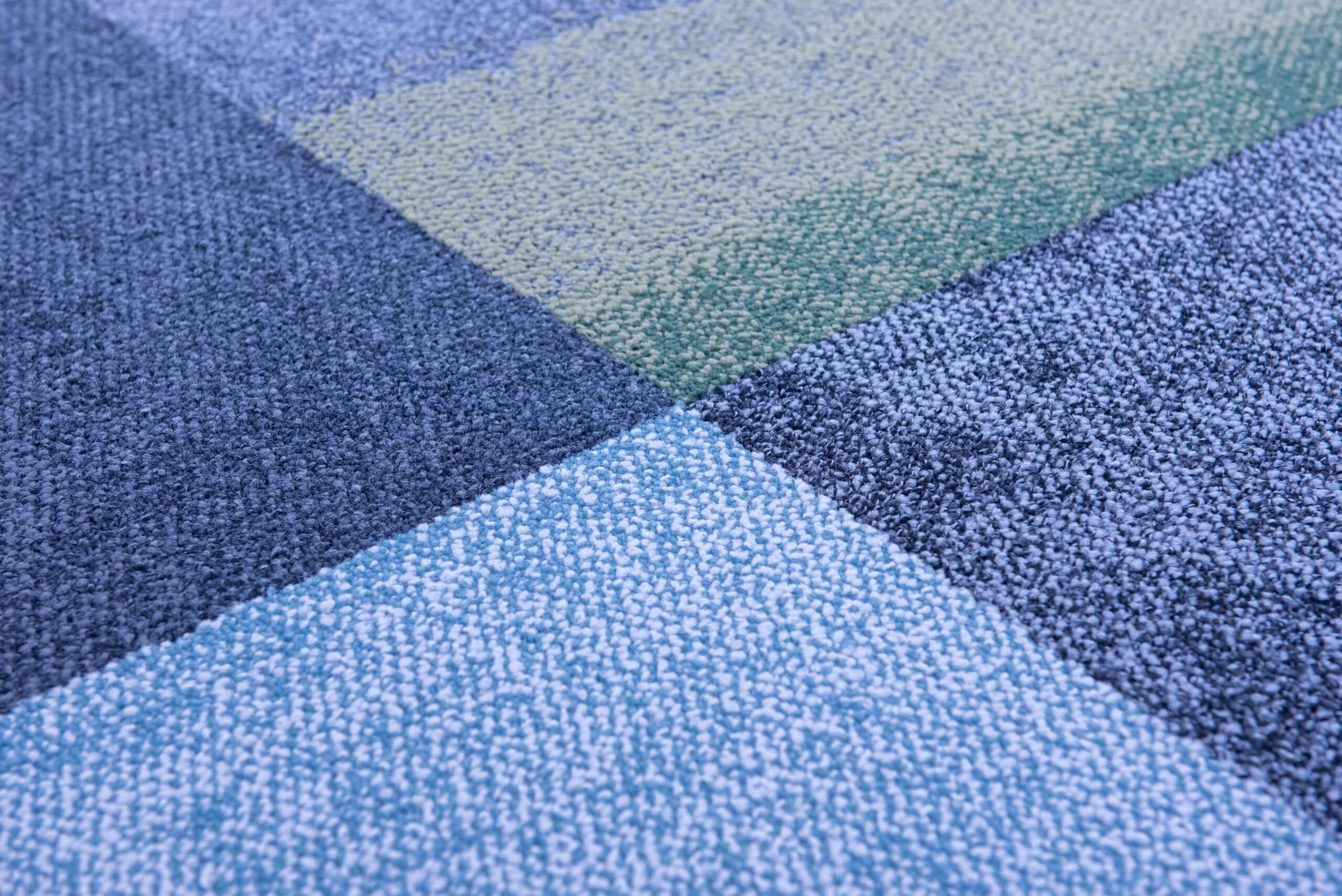
Rethinking Materials in Flooring
Sustainability expectations are quickly evolving, and incremental improvements are no longer enough. Today’s leaders are being challenged to deliver measurable impact, backed by data, while maintaining product performance and scalability.
Forward-thinking manufacturers are asking a new question: how can materials actively contribute to climate solutions, rather than simply reduce harm?
挑战
Moving Beyond Incremental Progress
For years, sustainability efforts have focused on efficiency gains, recycled content, and waste reduction. While very important, these approaches alone cannot meet rising expectations from regulators, customers, and specifiers.
Interface, Inc., a global leader in modular carpet, recognized this shift early through its Mission Zero initiative. The goal was clear: eliminate negative environmental impact through renewable energy, waste and water reduction, and more responsible material choices.
However, a critical challenge remained: traditional carpet tile backing materials still relied heavily on virgin petrochemical inputs, limiting the potential for deeper carbon reductions.
To move forward, Interface needed to:
- Replace virgin petrochemical materials
- Reduce overall product carbon footprint
- Maintain performance and manufacturability
- Support verifiable environmental reporting
Solution
Collaboration Backed by Data
Solving this challenge required more than a new material substitution. It required a data-driven, collaborative approach across the value chain.
By partnering with Kraton, Interface gained access to:
- Advanced bio-based materials derived from renewable resources
- Global research and development expertise
- Technical support across Europe and the United States
- Life cycle assessment capabilities to quantify environmental impact
Life cycle assessments became a critical role. It allowed Interface to measure impact across the full product life cycle and support Environmental Product Declarations with consistent, high-quality data.
This level of transparency is increasingly essential. Decision-makers need clear, comparable information to evaluate sustainability claims with confidence.
Impact
From Lower Carbon to Carbon Negative
The collaboration led to the development of CircuitBac Green, a carpet tile backing designed to deliver both performance and measurable environmental benefit.
Key outcomes include:
- Up to 87% recycled and bio-based content
- Carbon-negative profile that stores more carbon than is emitted during production
- Reduced dependence on fossil-based raw materials
- Strong market interest following its European launch
This innovation expands how materials are evaluated. Instead of focusing solely on reduction, it introduces the concept of contributing positive environmental value.
For architects, designers, and procurement teams, this translates to:
- Greater ability to meet sustainability goals
- Stronger alignment with ESG commitments
- Increased confidence in material data and reporting
What This Means for Industry Leaders
Innovations like CircuitBac Green reflect a broader shift in how products are designed and assessed.
Three priorities are emerging for industry leaders:
- Measurability: Sustainability efforts must be supported by credible, verifiable data.
- Collaboration: Cross-industry partnerships accelerate development and adoption of new solutions.
- Material innovation: Raw material selection plays a critical role in both performance and environmental outcomes.
Organizations that focus on these priorities are better positioned to respond to evolving market expectations and regulatory demands.
Partner(s):
Interface, Inc.
Conclusion
Designing for What Comes Next
The transition toward materials that deliver measurable environmental value is already underway. Companies that invest in transparency, rethink material inputs, and collaborate across the value chain will be better equipped to scale meaningful solutions.
The opportunity is clear: materials are no longer only a component of a product; they are a strategic driver of both performance and sustainability outcomes.
相关产品和信息
延伸阅读
探索更多见解、新闻和成功案例。
Reducing Adhesive Carbon Footprint With Bio-based Tackifiers
As sustainability expectations increase, adhesives manufacturers must reduce environmental impact without sacrificing performance. Renewable materials offer a pathway forward, helping companies meet regulatory requirements while improving carbon footprint and supporting recyclability across a range of applications.Voivodeship Road DW942, Poland
Tourism-driven regions require infrastructure that performs under constant seasonal traffic surges. In Wisła, Poland, this challenge created an opportunity to rethink how durability, sustainability, and cost efficiency can work together in a dependable way.Václav Havel Airport Runway
As global air travel continues to rise, airport infrastructure is under increasing pressure to perform without disruption. The question facing operators isn’t just how to repair aging pavements, rather how to ensure the pavements are ready for future travelers.