Case Study
KYALAMI大奖赛赛道
What It Takes to Build a High-Performance Racing Surface
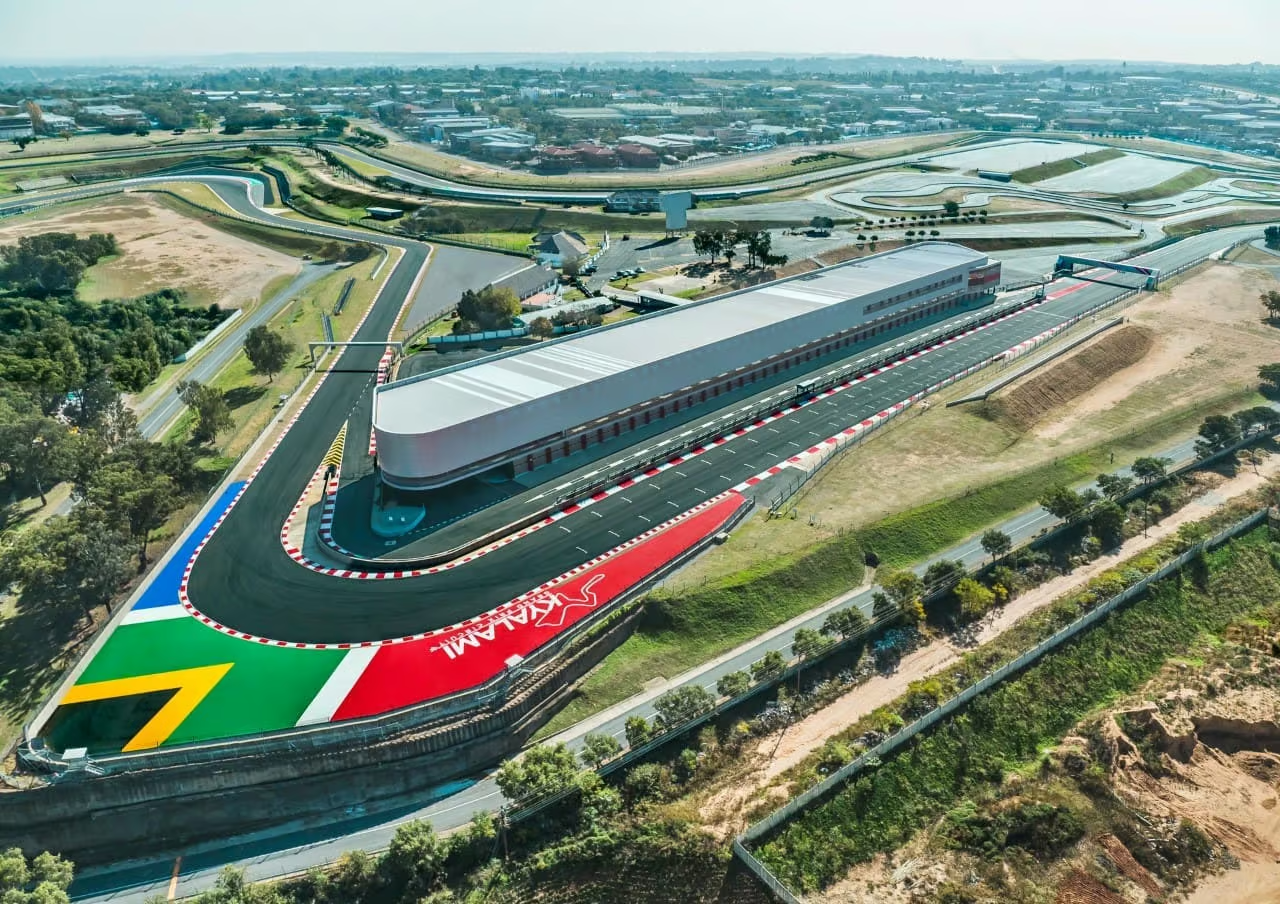
Paving the Only FIA Grade 2 Certified Track on the Continent
When vehicles push speeds approaching 320 km/h (198.8 mph), pavement is no longer just a materials question; instead, it becomes a safety imperative. The transformation of South Africa’s Kyalami Grand Prix Circuit demonstrates how advanced materials engineering can elevate infrastructure performance under the most demanding conditions.
挑战
Why High-Performance Surfaces Require a New Approach
Across infrastructure sectors, expectations are increasing. Assets must perform longer, withstand heavier loads, and meet stricter safety standards, all while minimizing maintenance and disruption. For high-performance applications like motorsport circuits, these pressures are even more pronounced.
Originally constructed in 1961 and once a host of Formula One races, Kyalami faced a critical inflection point when its track no longer met the stringent requirements for FIA certification. Reaching compliance was not simply about resurfacing; it required rebuilding the track to handle extreme speeds, repeated dynamic loading, and uncompromising safety expectations.
These challenges reflect a broader shift across infrastructure systems, where traditional materials and approaches are no longer sufficient to meet today’s performance demands.
Solution
Engineering for Performance, Not Just Compliance
Instead of making incremental improvements, the Kyalami project focused on designing a surface that could deliver measurable performance under real-world conditions. The approach combined material innovation with smart construction practices.
- The original asphalt was excavated to the base layer and reused as part of the new foundation, supporting both structural integrity and resource efficiency.
- A new asphalt mix was developed using a 5% styrene-butadiene-styrene (SBS) modified binder, engineered to withstand high-speed stress conditions.
- This mix was designed to meet strict performance requirements, including impermeability, resistance to deformation and fatigue, and stability under abnormal surface forces.
These decisions reflect a broader industry evolution. SBS-modified binders enhance elasticity and durability, enabling pavement to recover from deformation and resist fatigue cracking caused by repeated traffic loads. Rather than simply meeting specifications, materials are increasingly being engineered to extend service life and maintain performance over time.
Impact
From Materials to Measurable Performance
The results of this performance-driven approach are evident not only in certification, but in real-world operation. The renovated Kyalami circuit spans approximately 4.5 km (2.7 miles) and meets FIA Grade 2 standards, making it the only motor racing facility in Africa to achieve this level of accreditation.
More importantly, the track consistently performs under extreme conditions, with vehicles reaching speeds approaching 320 km/h (198.8 mph) while maintaining safety and reliability. This level of performance is a direct outcome of material selection and design strategy, not just construction execution.
While this project was designed for motorsports, the implications extend far beyond racing. The same material principles of fatigue resistance, deformation recovery, and long-term durability are all critical in high-traffic roadways, heavy industrial corridors, and infrastructure exposed to increasingly demanding environmental conditions.
- High-performance binders can extend pavement life and reduce maintenance frequency
- Improved resistance to cracking and rutting enhances long-term safety and reliability
- Performance-driven design helps infrastructure withstand higher loads and more extreme conditions
These benefits are becoming essential as infrastructure systems are pushed to do more with fewer resources.
Partner(s):
Bituguard
Conclusion
What This Means for Infrastructure Leaders
Kyalami underscores a larger industry shift: infrastructure is no longer defined by initial construction quality alone, but by how well it performs over time. As expectations continue to rise, engineers and decision-makers must move beyond traditional specifications and adopt materials and design approaches built for performance.
The future of infrastructure will depend on solutions that balance durability, safety, and lifecycle efficiency. Projects like Kyalami demonstrate that when material science is aligned with real-world demands, it is possible to achieve all three.
相关产品和信息
延伸阅读
探索更多见解、新闻和成功案例。
Reducing Adhesive Carbon Footprint With Bio-based Tackifiers
As sustainability expectations increase, adhesives manufacturers must reduce environmental impact without sacrificing performance. Renewable materials offer a pathway forward, helping companies meet regulatory requirements while improving carbon footprint and supporting recyclability across a range of applications.Voivodeship Road DW942, Poland
Tourism-driven regions require infrastructure that performs under constant seasonal traffic surges. In Wisła, Poland, this challenge created an opportunity to rethink how durability, sustainability, and cost efficiency can work together in a dependable way.Václav Havel Airport Runway
As global air travel continues to rise, airport infrastructure is under increasing pressure to perform without disruption. The question facing operators isn’t just how to repair aging pavements, rather how to ensure the pavements are ready for future travelers.