Case Study
Václav Havel Airport Runway
Rethinking Runway Performance

Building Pavements for the Next Generation of Air Travel
As global air travel continues to rise, airport infrastructure is under increasing pressure to perform without disruption. The question facing operators isn’t just how to repair aging pavements, rather how to ensure the pavements are ready for future travelers.
挑战
Infrastructure Under Pressure
Airports today operate in a constant state of demand. At Václav Havel Airport in Prague, serving over 17 million passengers annually, the rising traffic volumes combined with pavement deterioration created a critical need for modernization.
The runway surface, covering 26,000 m², needed to meet several requirements:
- Withstand heavy and repetitive aircraft loads
- Resist common failure modes such as cracking, rutting, and fatigue
- Perform reliably in harsh weather conditions, including water and frost exposure
- Be installed while the airport remained operational
This is a familiar challenge across the aviation sector. Airports worldwide are balancing growing demand with aging infrastructure, often relying on materials that were not designed for today’s operational intensity.
Solution
A Performance-Driven Solution
Rather than applying a traditional repair, the Prague project adopted a performance-based approach using stone mastic asphalt (SMA) combined with our highly modified asphalt (HiMA ™) binder, incorporating advanced polymer technology. Approximately 300 metric tons of SMA using Orbiton HiMA 25/55-80 bitumen grade were installed to rehabilitate the runway surface.
This material combination addresses the underlying limitations of conventional asphalt:
- SMA provides a stone-on-stone aggregate structure, delivering superior load-bearing capacity and resistance to deformation.
- HiMA technology enhances the binder with higher polymer content, improving elasticity, crack resistance, and fatigue performance.
For airport applications, this material pairing represents a change in pavement engineering where surfaces experience high stress and slow-moving loads.
Impact
Shifting Performance Expectations
Advanced asphalt systems like HiMA are helping redefine what long-term pavement performance looks like. The real value of this solution isn’t just meeting today’s requirements; it is redefining long-term performance expectations to extend the pavement service life.
- Increased resistance to rutting and cracking under heavy traffic.
- Improved durability against environmental stressors like water infiltration and freezing temperatures.
- Extended service life, reducing the need for structural repairs.
For airport operators, this means fewer disruptions, lower lifecycle costs, and more reliable infrastructure, which is critical in an industry where downtime is non-negotiable.
Partner(s):
Orbiton Asphalt, Skanska Construction
Conclusion
From Reactive to Predictive Infrastructure
This project reflects a broader shift in infrastructure strategy, from reactive maintenance to proactive, performance-based design.
Instead of optimizing upfront cost alone, decision-makers are prioritizing materials that:
- Extend service life
- Reduce maintenance frequency
- Support continuous operation
In this context, advanced materials are not incremental upgrades; they are foundational to building more resilient, future-ready infrastructure.
With its upgraded runway surface, Václav Havel Airport is now better equipped to handle continued passenger growth while maintaining safe and efficient operations. More importantly, the project offers a scalable model for airports worldwide navigating similar pressures, demonstrating that performance-driven materials can deliver both immediate results and long-term value.
As aviation demand continues to rise, the industry must rethink how it approaches infrastructure investment.
The opportunity is clear to shift away from repairs to proactive, performance-based solutions that support both growth and resilience.
相关产品和信息
延伸阅读
探索更多见解、新闻和成功案例。
Reducing Adhesive Carbon Footprint With Bio-based Tackifiers
As sustainability expectations increase, adhesives manufacturers must reduce environmental impact without sacrificing performance. Renewable materials offer a pathway forward, helping companies meet regulatory requirements while improving carbon footprint and supporting recyclability across a range of applications.Voivodeship Road DW942, Poland
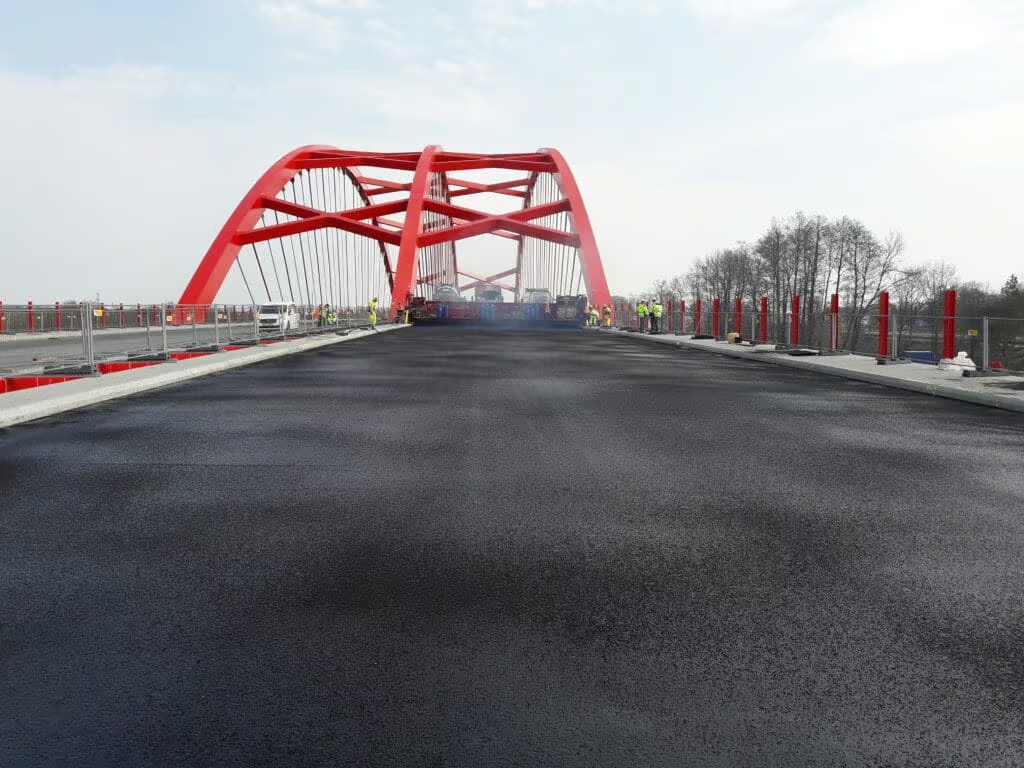
Tourism-driven regions require infrastructure that performs under constant seasonal traffic surges. In Wisła, Poland, this challenge created an opportunity to rethink how durability, sustainability, and cost efficiency can work together in a dependable way.Paving for Studded Tires in Alaska
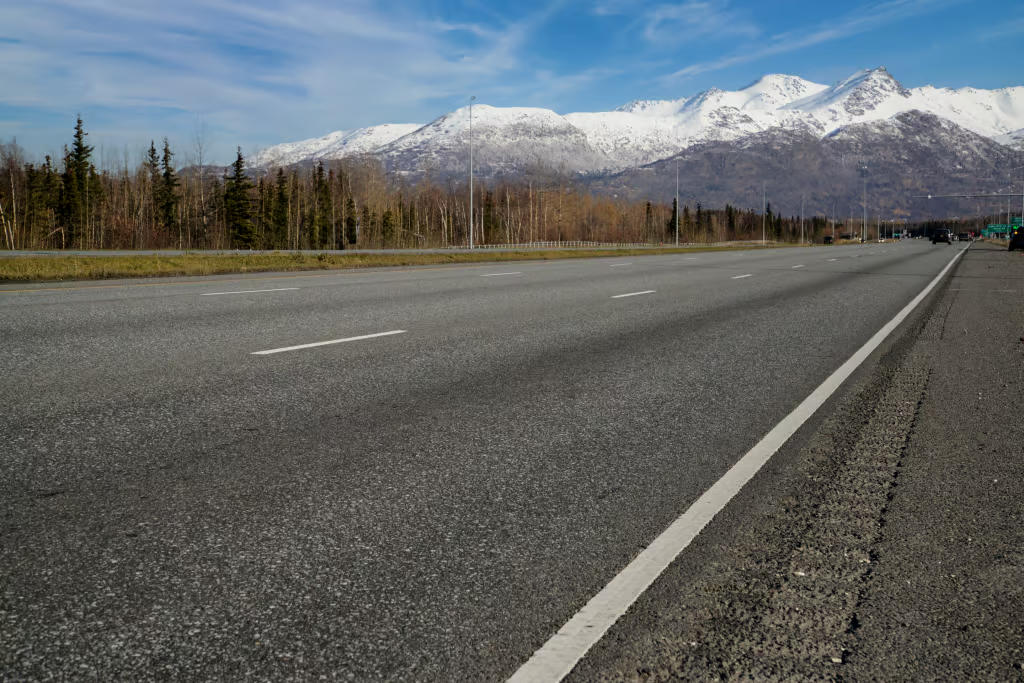
Across cold regions, studded tires remain essential for safety, but they also come at a cost. For road owners, the real question is no longer whether damage will occur, but how to extend pavement life despite it.