Knowledge Center
Advancing Sustainable Agriculture Through CTO Derived Chemistry
As agriculture faces mounting pressure to reduce environmental impact while maintaining performance, ingredient innovation plays a central role in shaping the future of crop protection and plant health. One promising pathway is the use of renewable, non‑food feedstocks that deliver high functionality without relying on fossil resources. Kraton’s bio-based chemicals derived from crude tall oil (CTO) can help enable this shift.
CTO is a natural byproduct of the Kraft pulping process. Because it originates from forestry byproducts and does not compete with food production, it offers an attractive and responsibly sourced foundation for advanced agrochemical ingredients. By transforming this material into high‑performance oils, fatty acids, distilled fractions, and resins, Kraton builds a portfolio of solutions designed to meet strict environmental expectations while supporting reliable performance in the field.
Turning a Byproduct into High‑Value Performance
Kraton’s development approach centers on sustainability at every stage, from feedstock selection to manufacturing. By valorizing CTO into functional materials such as bio-based oils, tall oil fatty acids (TOFA), distilled tall oil (DTO), and rosin esters, Kraton helps reduce dependency on finite fossil inputs and supports circular economy principles. This strategy can contribute to lower greenhouse gas emissions and reduced volatile organic compound (VOC) content in finished formulations.
For industries facing tightening regulatory requirements and rising expectations for environmental accountability, these CTO‑derived materials offer an immediate path toward improving sustainability profiles without sacrificing performance.
SYLVASOLV Oils: Bio-based Performance Without Compromise
Among Kraton’s portfolio, SYLVASOLV oils stand out as a multifunctional, bio-based alternative to paraffinic oils and soy methyl esters. The chemistry provides a combination of safety advantages and formulation benefits that align with modern agricultural needs.
- Nonflammable properties and low VOC content, meeting CARB LVP‑VOC classifications.
- Bio-efficacy comparable to conventional oils, without increased phytotoxicity under typical use conditions.
- Excellent wetting and spreading, which can enhance herbicide coverage.
- Optimized droplet size for drift reduction.
- Greater hydrolytic stability than many vegetable‑based oils, which helps preserve formulation integrity.
- High solvency power, enabling better penetration of waxy plant surfaces and more stable incorporation of active ingredients.
These same properties also make SYLVASOLV oils strong candidates for dust‑control treatments and anticaking coatings on fertilizers. Because their structure differs from ester‑type biobased oils, they avoid unwanted reactions with fertilizer components, which can simplify formulation work.
Expanded Functionality From Rosin Esters, TOFA, and DTO
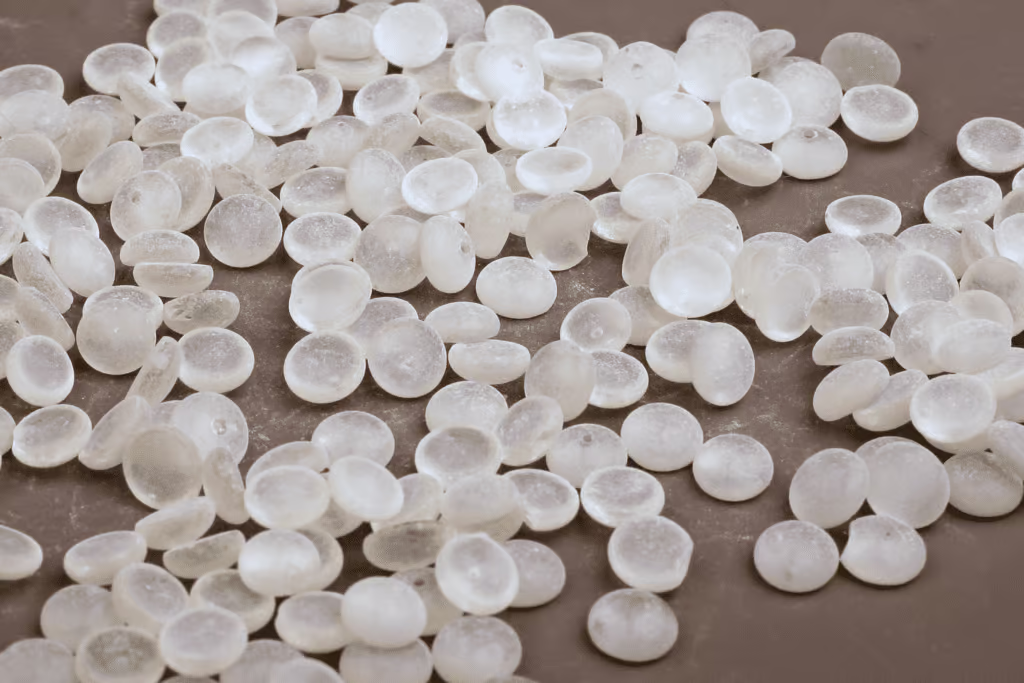
Beyond SYLVASOLV oils, Kraton’s broader CTO‑derived portfolio supports additional formulation needs. Rosin esters and TOFA‑based derivatives offer strong adhesion and compatibility for spreader‑stickers, emulsifiers, and fertilizer coatings. Meanwhile, DTO provides a versatile base for surfactants and adjuvants that contribute to stable, high‑performing mixtures. Each material class is engineered to meet functional expectations while minimizing environmental impact.
These ingredients also deliver added value in areas such as lubricity, corrosion protection, and environmental compatibility, expanding their usefulness beyond traditional crop protection applications. Their flexibility allows formulators to tackle challenges ranging from seed‑coating performance to equipment lubrication.
Supporting the Future of Sustainable Agriculture
The agricultural sector is navigating a critical transition as growers seek strategies that protect yields without compromising environmental health. CTO‑derived ingredients offer a practical pathway forward. By combining renewable sourcing, reduced emissions, and strong formulation performance, Kraton’s pine‑based chemistry provides tools that help address issues such as soil contamination, aquatic toxicity, drift management, and greenhouse gas emissions.
As sustainability expectations continue to rise, these materials offer a compelling balance of ecological responsibility and technical reliability. Through ongoing innovation in pine chemistry, Kraton aims to support a more sustainable and resilient future for agriculture.
Related Products and Information
Further Reading
Explore additional insights, news, and success stories.