Paving

As traffic volume grows and extreme weather conditions persist, the need for safer and more sustainable infrastructure solutions becomes increasingly urgent. Kraton is at the forefront of developing innovative bitumen modification technologies that enable the construction of cost-effective, durable roads using our HiMA™ technology. Our solutions improve asphalt performance and longevity by enhancing resistance to rutting, making roadways more crack-resistant, and reducing maintenance costs, construction delays, and traffic disruptions.

As a pioneer in bitumen modification, our products and global supply network allow us to consistently deliver superior performance, processability, and reliable supply.

Paving

Leader in Polymer Solutions for Bitumen Modification for Over 60 Years

Circularity

100% Recyclable
Enable High RA Content
Reduce Resource usage

Durability

Enhances Rutting & Cracking Resistance
Reduces Maintenance Need
Extends Service Temperature Range

Efficiency

Compatible with WMA
Low Viscosity Solutions
Effective Polymer Network
Sustainability Benefits

Our polymers are fully recyclable, and the pavement constructed with our solutions has a lower carbon footprint due to extended pavement life.

Our pavement solutions are easy to implement and require minimal maintenance, reducing the overall economic burden.

Roads are fundamental to a well-functioning society. Our solutions contribute to making roads better and safer.

High-Performance Solutions for Paving Circularity

Engineered to meet evolving paving industry needs to increase the usage of reclaimed asphalt and reduce GHG emissions, CirKular+ Paving Circularity Series is set to increase reclaimed asphalt content in the asphalt mix up to 50% and beyond in the surface layers, while enabling improved processability and performance.

Paving Applications

Semi-trucks on a freshly paved road deck
Roads and Highways

Are your roads subject to the demands of constantly increasing traffic load, extreme weather conditions, tight budgets, and the public’s expectation of uninterrupted traffic? Kraton can help provide solutions to address these issues and reduce the need for re-paving operations with our crack-resistant asphalt modifications.

Case Studies
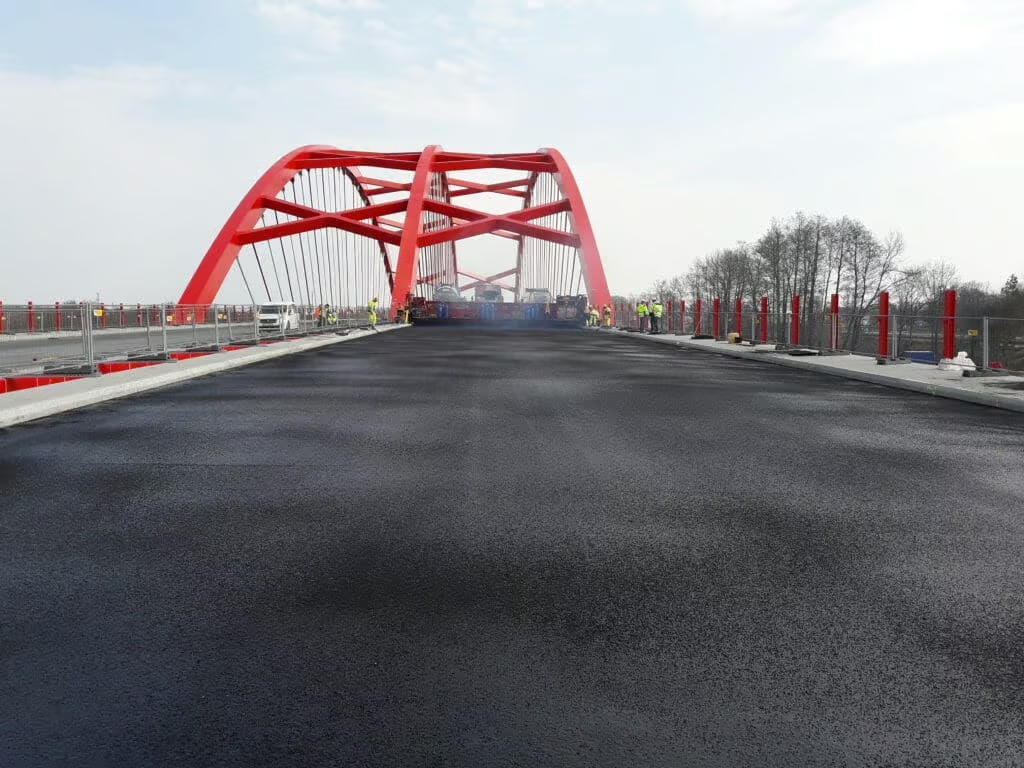
Bridge Decks

Underlying structure protection, durability, flexibility, and ease of construction are fundamental needs for bridge deck asphalt mixtures. Our bitumen modification solutions can help address these concerns while enabling bridge longevity.

Case Studies
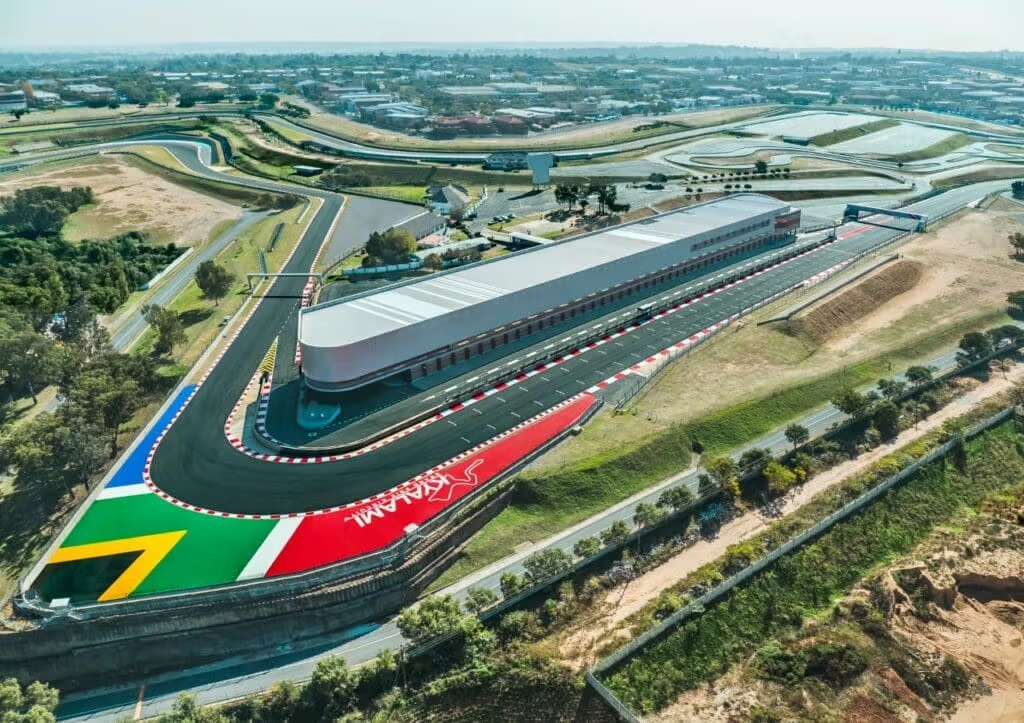
Racetracks

When it comes to car racing, every bit of the pavement matters. Excellent long-term smoothness and grip provided by Kraton technologies give the driver an edge in beating the record.

Case Studies

Seaports

As the global economy advances, seaport terminals and industrial complexes remain the conduits for economic growth. Investing in durable high-performance modified asphalt pavements, capable of withstanding extra heavy and static loads, like Kraton's HiMA, can make the enterprise more profitable and reliable.

Case Studies

Airplane takes off from a freshly paved runway
Airports

It takes a particular pavement to withstand repeated airplane landings and takeoffs. Kraton technology solutions are used at over 60 airports internationally to make runways and taxiways last longer while maintaining smoothness, preventing traffic disruptions, and saving maintenance budget.

Case Studies
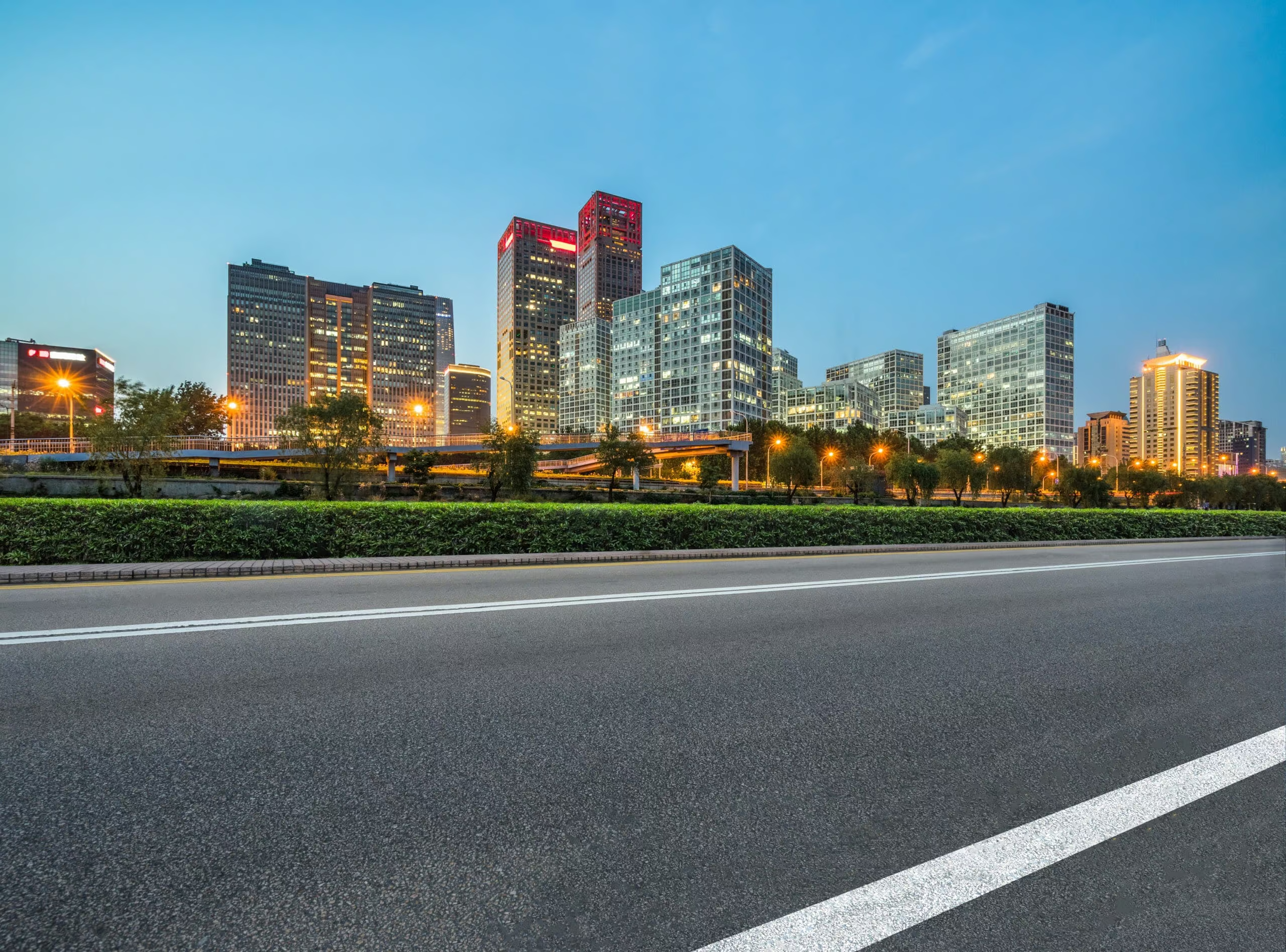
Cities

With growing metropolitan populations, city planners increasingly seek resilient, sustainable, and innovative pavement solutions. Kraton technologies can ensure your roads are ready for the demands of tomorrow.

Case Studies

Paving Case Studies

Technologies
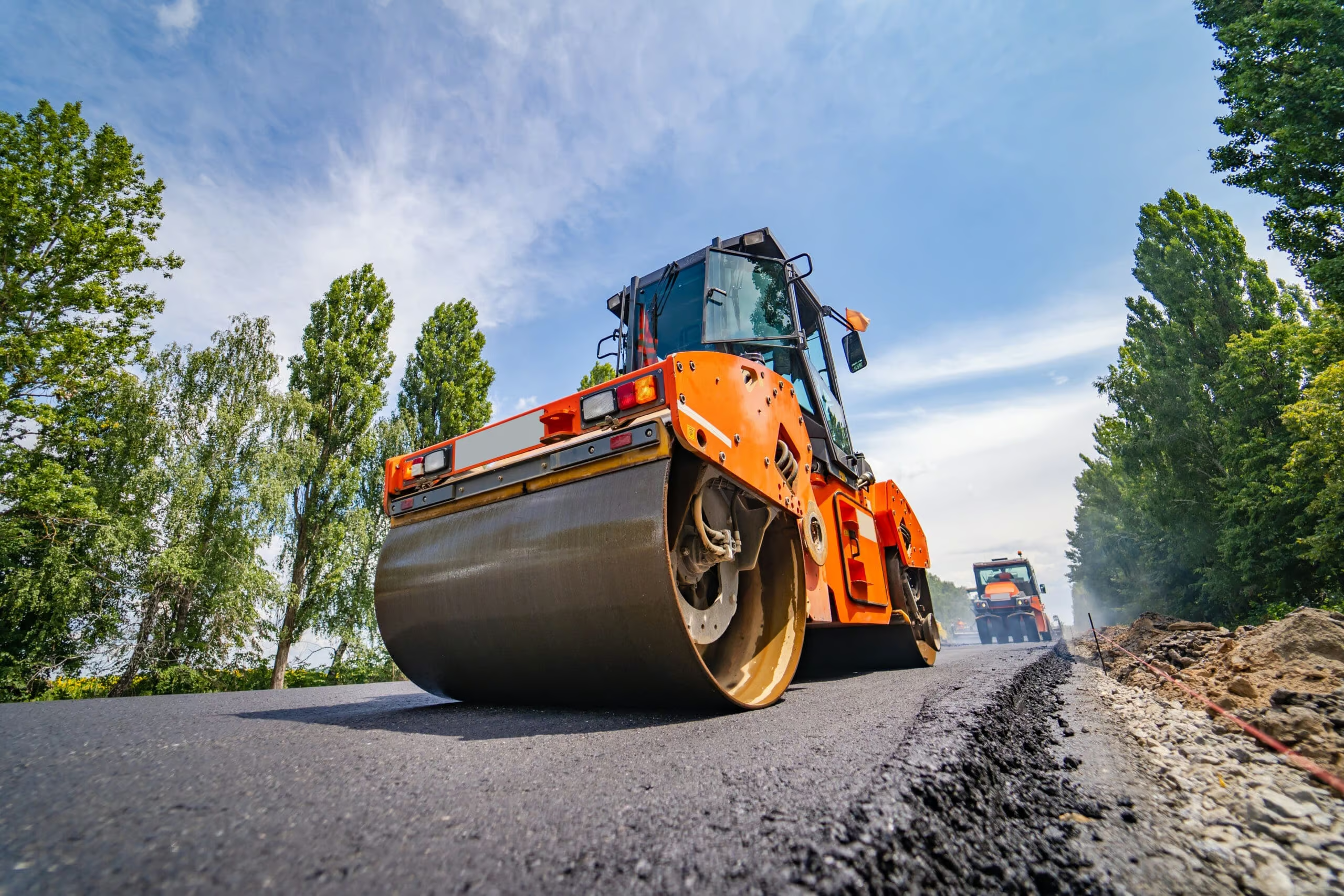
Road repair, compactor lays asphalt. Heavy special machines. Asphalt paver in operation. Side view. Closeup.
HIMA™ and Conventional PMB

SBS polymer-modified bitumens (PMB) provide asphalt pavements with enhanced mechanical and aging characteristics. When used appropriately, PMBs enhance the pavements’ economic and environmental value. Kraton offers a broad range of SBS polymers designed to work in even the most complex bitumen sources, providing the right balance of material properties.

Asphalt pavements flex under traffic, making it crucial for the bitumen to be strong and resilient. With their unique molecular structure, Kraton polymers enhance durability by adding flexibility, elasticity, and toughness to the bitumen mixture. This reduces sensitivity to extreme temperatures and improves performance properties across a wide temperature range.

HiMA and conventional PMB encompass polymer loading levels of 2-8 wt—% of SBS in bitumen. As the modification level increases, the bitumen resists high-temperature deformation and intermediate-temperature cracking. The effect depends on polymer content, type, and the formulation process.
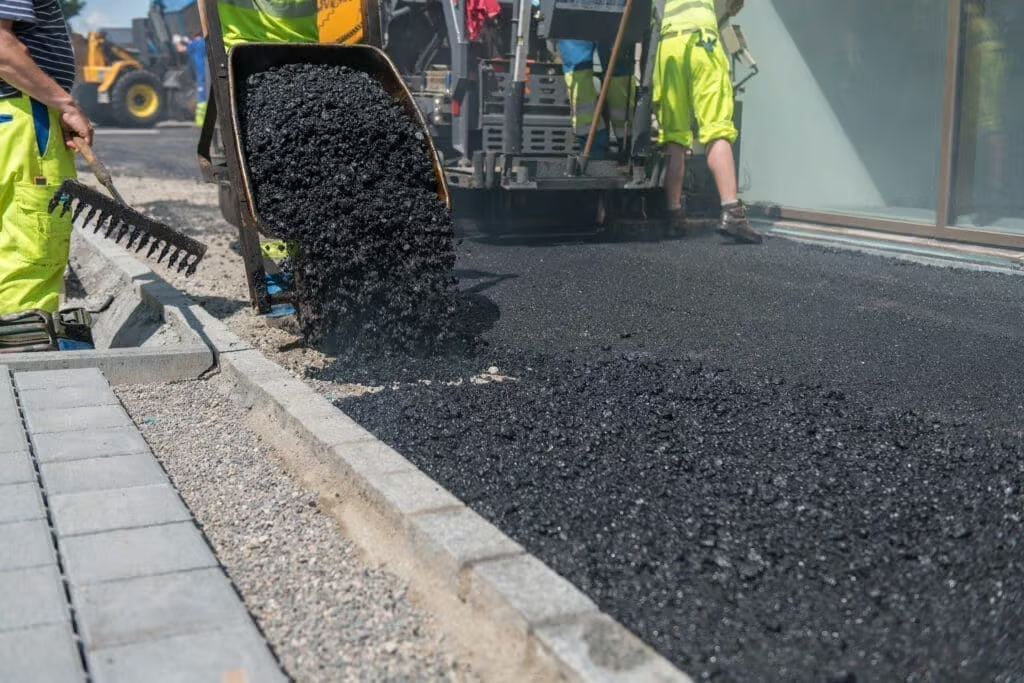
Paving operations pour fresh Highly Modified Asphalt onto a roadway
Emulsions

Emulsions are developed using HiMA™ or PmB and adding water plus emulsifier. SBS is blended into the base asphalt before emulsification, as opposed to modification with water-based, latex polymer dispersions.

Kraton D grades are the most technologically advanced and user-friendly polymer options for manufacturing pre-modified asphalt emulsions.

Benefits

Enhanced Polymer Compatibility

  • Improved compatibility in a wide range of base asphalts​
  • Low shear blending option
  • Streamline formulations through a single polymer​

Superior Liquid Emulsion Properties

  • Excellent initial and long-term emulsion viscosity and storage stability​
  • Improved resistance to shear and pumping processes
  • Optimal balance of break and set properties​
  • Can tune emulsion viscosity easily as a function of residue content

Lower Modified Asphalt Viscosity

  • Leads to smaller particle size and narrower distribution​
  • Allows for emulsification on ambient pressure equipment
  • Potential for improved performance through higher polymer loading​

Improved Emulsion Paving Solutions

  • Better chip retention​
  • Extended pavement system durability

Learn More About HiMA

Links open in new tab.

  • NCAT Report 12-08: Field and Laboratory Study of High-Polymer Mixtures at the NCAT Test Track – Interim Report

Laboratory and field test results from the original Kraton HiMA test section (N7) and control (S9) at NCAT. Includes binder and mixture test results and pavement response measurements. HiMA provided significant improvements in resistance to rutting and fatigue cracking in both the lab and the field compared to the control.

  • NCAT Report 13-03: Field and Laboratory Study of High Polymer Mixtures at the NCAT Test Track: Final Report

Includes Hamburg and S-VECD laboratory results for mixtures used on N8 (Kraton-HiMA) and S9 (control), and field performance after one full (>10 million ESAL) loading cycle. Rutting performance in the lab and the field was better when using HiMA; neither test section exhibited cracking or a change in IRI.

Performance results of the Kraton HiMA and control test sections after two complete loading cycles. “Green Group” study results, including a section using a base mixture with 35% RAP and HiMA. Oklahoma DOT N8 performance and rehabilitation using HiMA.

Cracking group experiment used HiMA in mixtures with ̴20% RAP as the base for all six test sections, to induce surface-initiated cracking without having fatigue cracking starting from the bottom of the asphalt layer. Section S6 included HiMA in the surface. Experiment continued through the next loading cycle.

  • NCAT Report 17-04: High-Modulus Asphalt Concrete (HMAC) Mixtures for Use as Base Course

Evaluated current mixture design methodology for high modulus base layers and evaluate potential effects on performance. This included a mixture using HiMA with 35% RAP, which had the greatest resistance to rutting and fatigue damage of the mixtures tested in the laboratory.

Recommends greater use of polymer-modified binders and higher binder content to improve asphalt mixture performance, and notes that HiMA binders can be used to “improve asphalt mixture resistance to both rutting and cracking and increase pavement structural capacity.”

Evaluated PFC (OGFC) mixtures using aggregate/gradations with respect to an array of mixture performance tests. HiMA was included as one of the binders used in the study. Mixtures using HiMA provided the greatest resistance to rutting, raveling, and cracking, but the AASHTO draindown test failed without using fiber stabilizers.

Cracking Group-after 20 MESAL, minimal “bottom-up” cracking originating in HiMA base, Section S6 using HiMA full-depth had minimal superficial cracking and rutting. Alabama DOT thinlay test sections were built over a 7 in. HiMA base-placed and compacted in a single lift. No structural distress observed after one loading cycle. Proactive Preservation included microsurfacing using a highly modified asphalt emulsion (CSS-1HP), which remained intact and successfully extended pavement life.

Links open in new tab.

  • FL/DOT/SMO/18-588: Evaluation of the Performance of High SBS Modified Asphalt Binder through Accelerated Pavement Testing

FDOT compared the performance of Superpave mixtures using HiMA and PG76-22 on three test sections at their Accelerated Pavement Testing facility. After 100,000 passes of the load simulator, both HiMA test sections had slightly over half the rutting as the control. The HiMA test sections were also projected to have significantly greater fatigue lives.

  • BE287: Evaluation of FC-5 with PG 76-22 HP to Reduce Raveling

TTI study comparing OGFC mixtures using HiMA and PG76-22 using oolitic limestone and gneiss. HiMA mixtures provided superior resistance to raveling, cracking and rutting compared to PG 76-22, and were projected to extend the service life by around 50%.

  • BE321: Structural Coefficient for High Polymer Modified Asphalt Mixes

University of Nevada-Reno study to identify a proper value of AASHTO structural layer coefficient to use when designing flexible pavements in Florida using HiMA binder. This included laboratory testing, pavement modeling, and full-scale testing, resulting in a recommended value of 0.54, which is 22% higher than for conventional binders.

  • EXP-SR-45: Performance Evaluation of HiMA Binder to Mitigate Reflective Cracking of Concrete Pavement

Field performance comparison between HiMA and PG76-22 Superpave mixtures placed over a jointed concrete pavement in Tampa, FL. HiMA mixtures had considerably less reflection cracking and rutting after four years of service.

UF laboratory study to evaluate binder tests (LAS and BFE) with respect to mixture fatigue cracking resistance, testing six binders and twelve mixtures with two aggregate types. SBS modification reduced binder damage rate, with HiMA providing the lowest rate of damage in mixture tests.

Links open in new tab.

  • VTRC 18-R14: Evaluation of Highly Polymer-Modified Asphalt Mixtures, Phase I (2018)

VTRC evaluated practical aspects of using a HiMA mixture to learn if this might be a realistic alternative to mitigate reflection cracking in asphalt overlays of jointed concrete. The results found that no major changes were necessary in production and paving, and that HiMA mixtures had superior lab performance.

  • VTRC 21-R16: Laboratory and Field Performance Evaluation of Pavement Sections With High Polymer-Modified Asphalt Overlays

VTRC study summarized experience around the US using HiMA and describes a laboratory study of performance-related testing of plant-produced HiMA mixtures, including SMA. Field performance after 5 years of service was summarized for HiMA overlays versus controls, estimating that HiMA overlays extend predicted service life by 34%.

Links open in new tab.

Contractor/supplier perspective of a major rehabilitation project using HiMA on I-59/20 west of Tuscaloosa, AL. Emphasized the need for clear communication during the project noting the shorter shelf life during storage.

  • SEAUPG Presentation, 2018: I-59 / I-20 HiMA Black Warrior River Basin Project – Owner Perspective: By Lyndi Blackburn, P.E.- Alabama DOT

ALDOT perspective on the I-59/20 project, explaining that HiMA was used on this project due to the constraints presented by the distress in the existing pavement and the inability to raise the profile due to the number of bridges on the project.

Reviewed FDOT’s history with HiMA up to 2019, reporting successful applications but pointing out things that should be considered before specifying this binder grade.

Written by Frank Fee, discusses successful resurfacing of jointed concrete pavement on First Avenue in Manhattan using HiMA in a “high performance, thin overlay” (HPTO) mixture.

The Florida Department of Transportation (FDOT) has increasingly used HiMA to address severe rutting, fatigue, reflective cracking, and raveling. This report is a case study of FDOT’s experience and includes background, specifications, implementation, design, planning, construction, and performance.

This document provides information to assist agencies, contractors, and material suppliers in adopting and using HiMA. It includes general information on project selection and pavement design, material selection, materials and construction specifications, and materials handling best practices.