Case Study
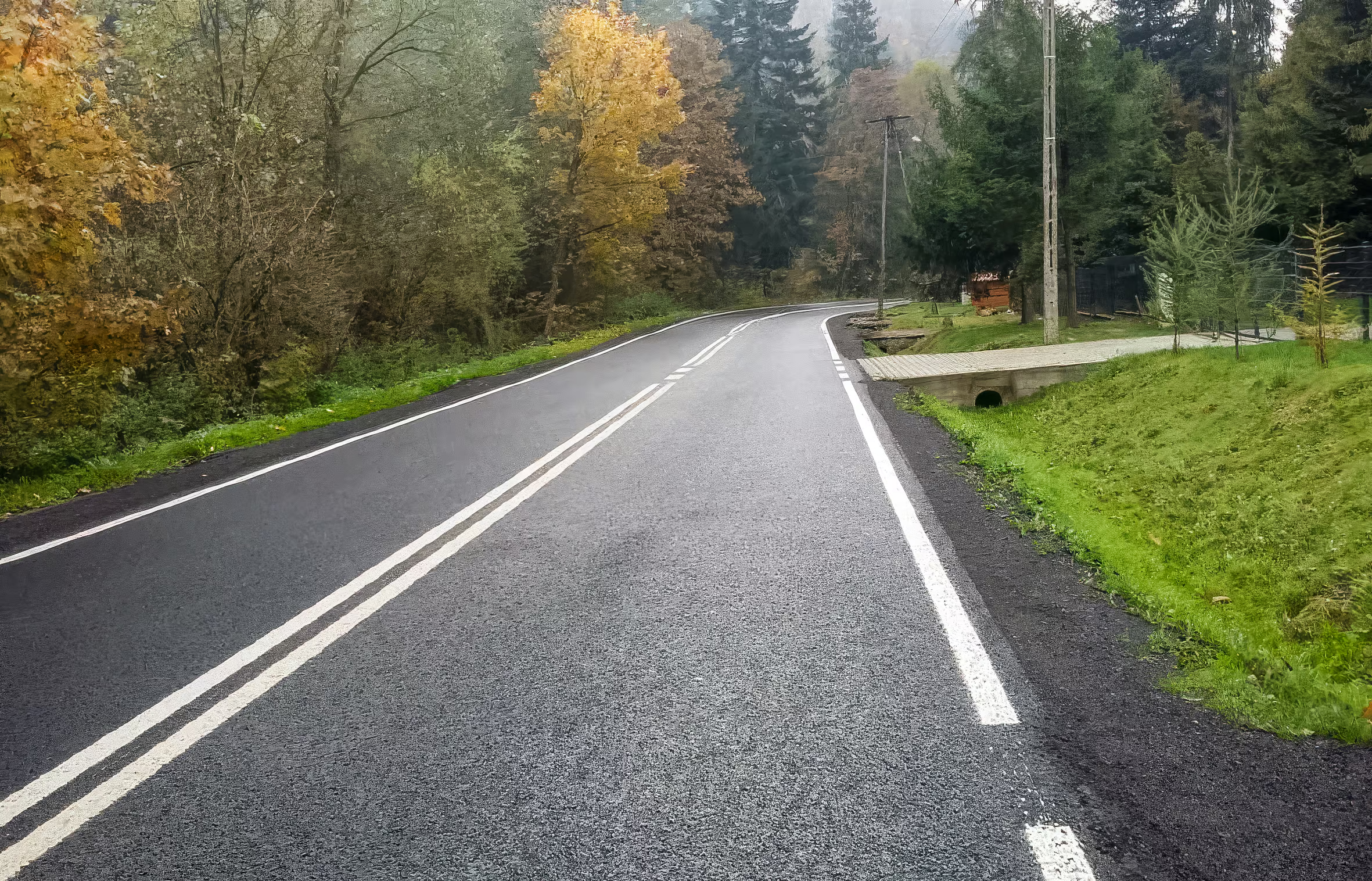
Voivodeship Road DW942, Poland
Designing for Durability in Tourism Hubs
Reducing Maintenance on High-Traffic Roadways
Tourism-driven regions require infrastructure that performs under constant seasonal traffic surges. In Wisła, Poland, this challenge created an opportunity to rethink how durability, sustainability, and cost efficiency can work together in a dependable way.
Challenge
Infrastructure Under Pressure
Wisła, located in the Silesian Beskids mountain range, relies heavily on tourism, including internationally recognized ski jumping events. This creates an intense and continuous flow of traffic, particularly along Voivodeship Road DW942, one of the town’s main access routes.
For ZDW Katowise, the regional road authority, the challenge extended beyond construction. The focus was clear:
- Keep traffic moving with minimal disruption
- Deliver pavement that withstands heavy, repetitive loads
- Manage cost without sacrificing performance
Conventional asphalt solutions often require intervention in these conditions, creating uncertainty, higher maintenance demands, and increased disruption for both residents and visitors.
Solution
A More Reliable Approach: Designing for Performance
To address these demands, ZDW Katowice adopted a performance-driven approach by selecting Orbiton asphalt with HiMA technology, developed by ORLEN Asfalt, and using Kraton’s HiMA.
HiMA technology enhances resistance to rutting, cracking, and fatigue, helping roads maintain structural integrity even under sustained traffic volumes.
This decision reflects a broader industry shift. Infrastructure leaders are no longer focused only on initial cost. They are prioritizing materials that deliver consistent, predictable performance over time.
Impact
Turning Strategy into Results
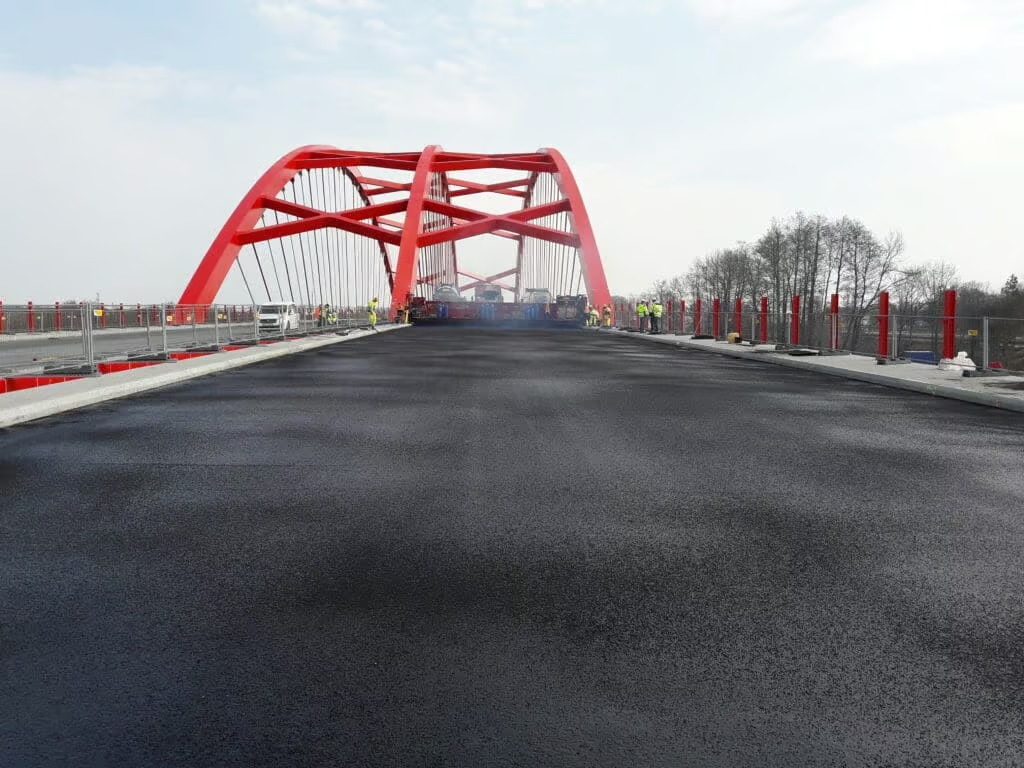
The reconstruction of a 3.5 km (2.17 mi) section of DW942 demonstrates how advanced materials can be applied at scale:
- 20 cm (7.87 in) AC 22 base layer using Orbiton 25/55-80
- 8 cm (3.14 in) AC 16 base layer using Orbiton 25/55-80
- 4 cm (1.57) SMA 11 wearing course using Orbiton 45/80-80
This structure approach ensures that each layer contributes to overall durability and load resistance.
The impact extends beyond a single project. Between 2015 and 2016, ZDW Katowice completed 78 km (48.46 mi) of HiMA pavement across 26 sections. This level of implementation signals confidence in repeatable, reliable results.
Measurable Performance with Controlled Costs
The data from ZDW Katowice provides a clear and practical insight:
- Reconstruction cost increased by only 3.5%
- New construction costs increased by just 1%
These modest increases support a significant improvement in pavement durability and reduce the need for frequent repairs.
For decision makers, this reinforces a critical point. Reliable infrastructure is not defined by the lowest initial cost. It is defined by consistent performance, reduced intervention, and greater predictability.
What This Means for Infrastructure Leaders
The Wisła project highlights key considerations for organizations managing high-demand road networks:
- Reliability is essential in high-traffic environments
- Performance-based materials support more predictable outcomes
- Life cycle thinking strengthens both sustainability and cost control
As traffic volumes grow and expectations rise, infrastructure strategies must deliver steady performance while minimizing disruption.
Partner(s):
ZDW Katowice, ORLEN Asfalt
Conclusion
A Clear Commitment to Consistency
Zbigniew Tabor, Director of ZDW Katowice, reinforced this approach with a decisive commitment. Starting in 2017, all repairs, reconstructions, and new road construction projects in the region would use HiMA bitumen.
This decision reflects confidence in a solution that consistently delivers.
Related Products and Information
Further Reading
Explore additional insights, news, and success stories.
Reducing Adhesive Carbon Footprint With Bio-based Tackifiers
As sustainability expectations increase, adhesives manufacturers must reduce environmental impact without sacrificing performance. Renewable materials offer a pathway forward, helping companies meet regulatory requirements while improving carbon footprint and supporting recyclability across a range of applications.Václav Havel Airport Runway
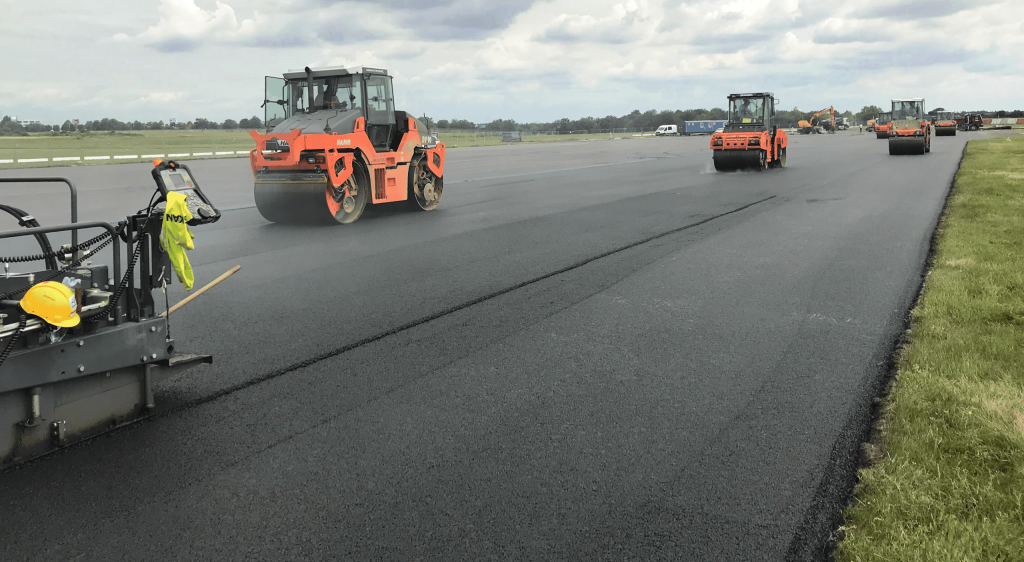
As global air travel continues to rise, airport infrastructure is under increasing pressure to perform without disruption. The question facing operators isn’t just how to repair aging pavements, rather how to ensure the pavements are ready for future travelers.Paving for Studded Tires in Alaska
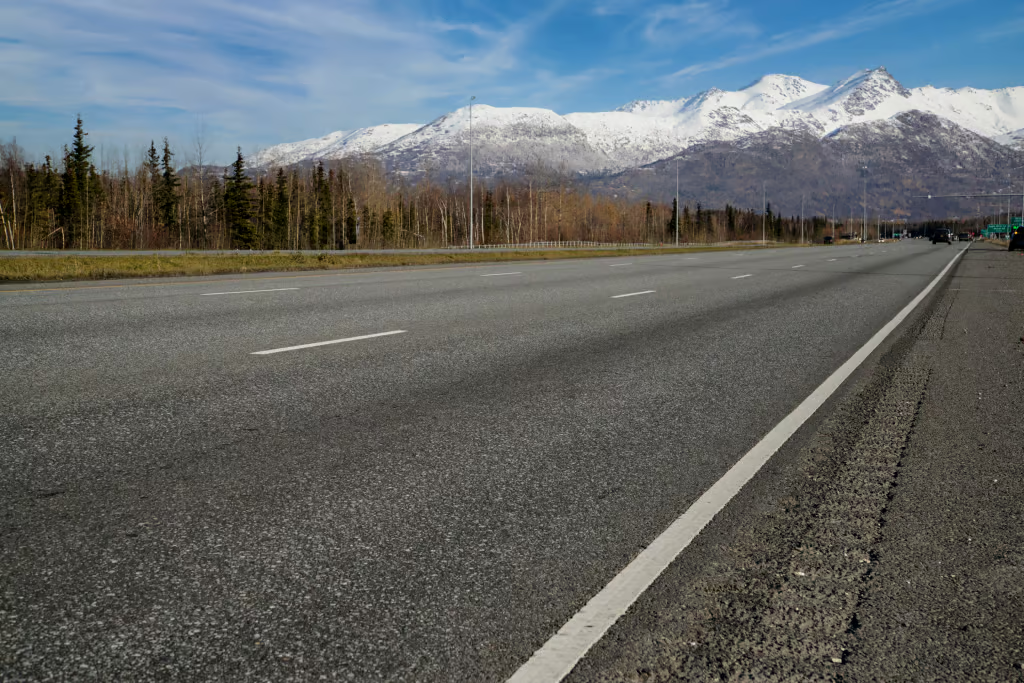
Across cold regions, studded tires remain essential for safety, but they also come at a cost. For road owners, the real question is no longer whether damage will occur, but how to extend pavement life despite it.