Case Study
MS-3 Mastic Bridge Deck
Building Durable Infrastructure in Challenging Terrain
Lessons from Poland’s MS-3 Bridge
In regions where natural beauty meets complex topography, infrastructure design requires more than standard solutions; it demands long-term thinking. Northern Poland’s Mazury region offers a compelling example of how innovation in materials can support resilient bridge construction.
Challenge
When Environment and Infrastructure Collide
Mazury, located in northeastern Poland, is known for its 2,000 post-glacial lakes and undulating terrain. While visually striking, this landscape presents significant challenges for road and bridge construction, particularly when projects must navigate waterways, wildlife corridors, and existing infrastructure simultaneously.
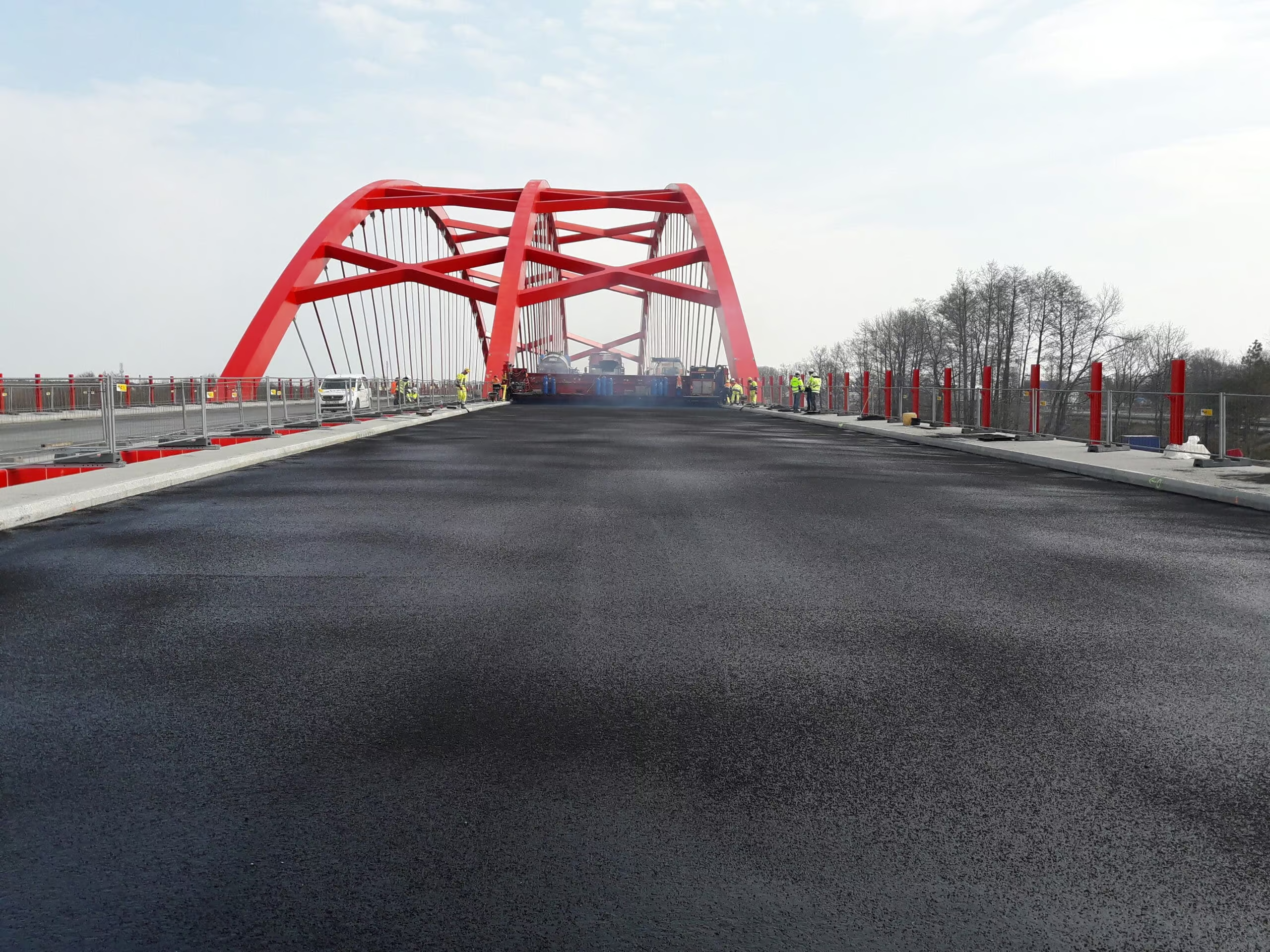
This was the reality facing GDDKiA Olsztyn, the asset owner, when they commissioned a major bypass and expressway project around the city of Ostróda. In 2015, Budimex S.A., the general contractor, was awarded the contract, which included construction of the MS-3 bridge. This project spans 677 meters (2,221 feet) and measures 28 meters (92 feet) wide. The bridge crosses a creek, two existing roadways, and two animal passageways, each adding complexity to both design and execution.
For stakeholders, the challenge extended beyond construction and posed a question: how to ensure long-term pavement performance on a structure exposed to high traffic loads, environmental stress, and demanding service conditions?
Solution
Rethinking Bridge Deck Performance
Bridge deck pavements are particularly vulnerable to rutting and permanent deformation due to constant traffic loads, temperature fluctuations, and structural movement. Early degradation can drive costly maintenance and disrupt critical transportation routes.
To address this, the MS-3 bridge required a pavement system capable of:
- Withstanding sustained thermal and mechanical stress
- Delivering long-term resistance to permanent deformation
- Supporting efficient installation under complex construction conditions
Importantly, any solution also needed to align seamlessly with established construction practices, minimizing risk during execution.
Advanced Materials, Practical Application
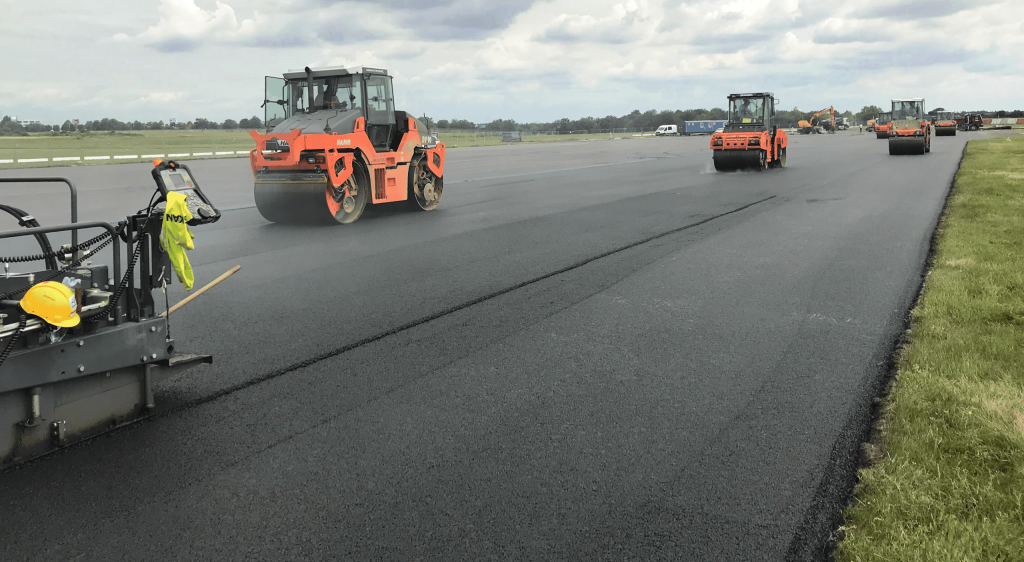
The project team selected HiMA ™ technology-enabled mastic asphalt, using polymer-modified bitumen produced by Locos Asphalt.
The final bridge deck structure was carefully engineered to balance durability and constructability:
- 25 cm (10 in) reinforced concrete bridge deck
- Methyl methacrylate waterproofing membrane
- Two 4 cm (1.6 in) layers of mastic asphalt, including a high-performance layer modified with 45/55-90 HiMA
Execution conditions further highlight the robustness of the solution:
- Mastic asphalt production temperatures ranged from 190-210°C (374-410°F)
- The material was transported for up to eight hours at approximately 200°C (392°F)
- Compaction occurred at 200-220 °C (392-428°F)
Despite the high polymer content and elevated temperatures, Budimex S.A. reported that the material handled similarly to conventional mastic asphalt, an important factor in ensuring smooth implementation without introducing additional construction complexity.
This ability to combine enhanced performance with familiar application methods is the key enabler of successful innovation in infrastructure projects.
Impact
Performance That Extends Beyond Installation
Since completion in 2017, the MS-3 bridge deck has demonstrated strong resistance to permanent deformation, meeting the project’s core durability objectives.
For GDDKiA, this translates to:
- Reduced maintenance requirements
- Lower lifecycle costs
- Increased long-term reliability for road users
In a region where environmental and structural challenges are unavoidable, these outcomes reinforce the value of investing in materials that are designed for long-term performance, not just at the initial delivery.
Partner(s):
Lotos Asphalt, Budimex S.A., GDDKiA Olszteyn
Conclusion
What This Means for Infrastructure Leaders
The MS-3 bridge underscores a broader shift in infrastructure strategy: the move from focusing on upfront construction to prioritizing lifecycle performance and resilience.
For decision-makers, engineers, and contractors, a few key takeaways stand out:
- Durability begins with material selection. High-performance binders and systems can significantly extend service life.
- Constructability cannot be overlooked. Even advanced solutions must integrate seamlessly into real-world construction environments.
- Performance must be proven under real conditions. Transportation, handling, and installation all play a role in long-term success.
As infrastructure systems continue to evolve, aligning material innovation with practical application will be essential to delivering reliable, cost-effective assets.
Related Products and Information
Further Reading
Explore additional insights, news, and success stories.
Reducing Adhesive Carbon Footprint With Bio-based Tackifiers
As sustainability expectations increase, adhesives manufacturers must reduce environmental impact without sacrificing performance. Renewable materials offer a pathway forward, helping companies meet regulatory requirements while improving carbon footprint and supporting recyclability across a range of applications.Voivodeship Road DW942, Poland
Tourism-driven regions require infrastructure that performs under constant seasonal traffic surges. In Wisła, Poland, this challenge created an opportunity to rethink how durability, sustainability, and cost efficiency can work together in a dependable way.Václav Havel Airport Runway
As global air travel continues to rise, airport infrastructure is under increasing pressure to perform without disruption. The question facing operators isn’t just how to repair aging pavements, rather how to ensure the pavements are ready for future travelers.